Skip to content
Arcelo Nutri Food
Buying guide

How to choose a peanut butter, starting with the back of the jar

Most of what separates one jar from another is decided by four or five lines of small print. This is what those lines mean, what a good ingredient list looks like, where the protein figure actually comes from, and how to pick the jar that suits how you eat rather than the one with the loudest front label.

17 min read7 sections
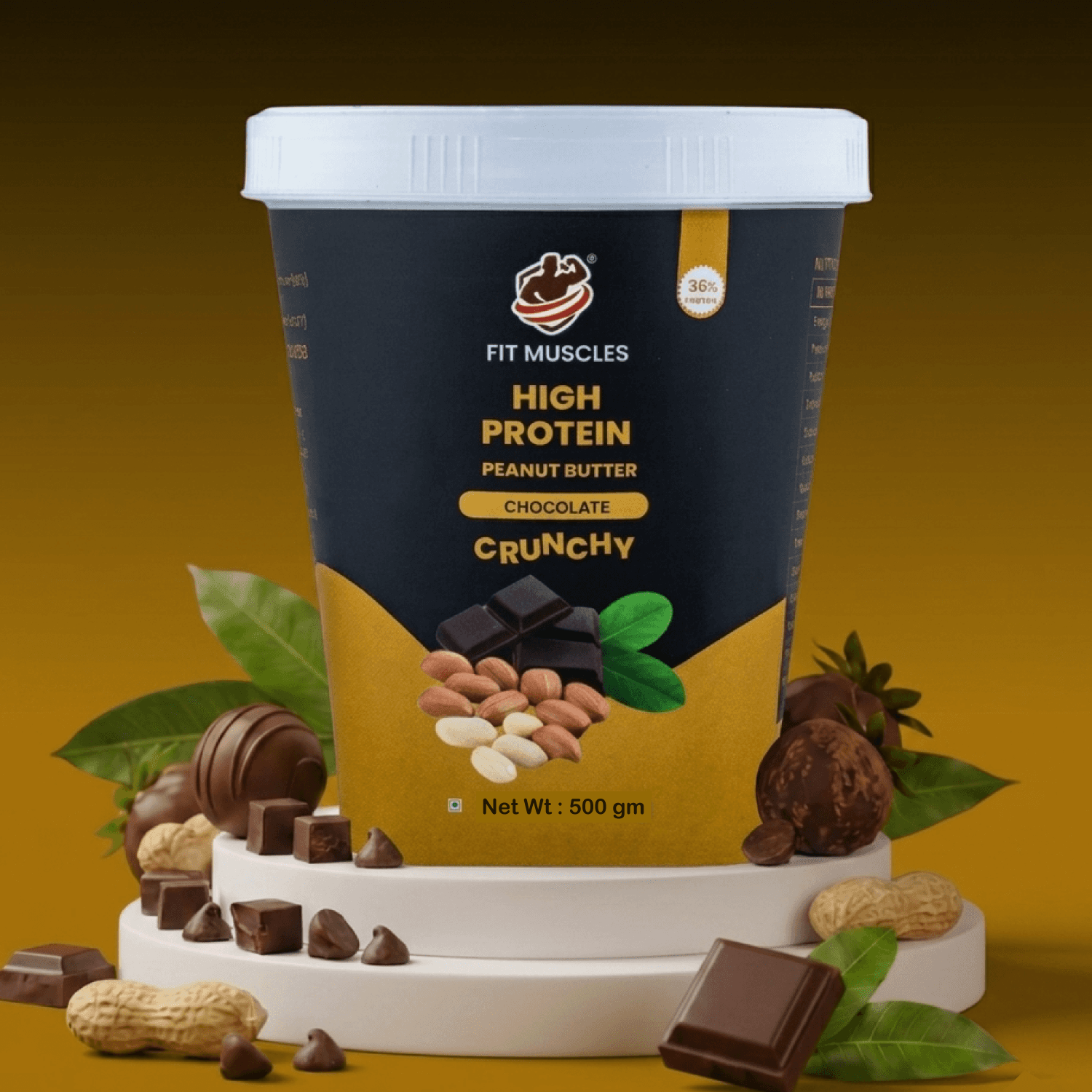
A jar of Fit Muscles peanut butter

In short

01

The ingredient list matters more than the front label. Peanuts should be first, and on the best jars they should be the only thing there.

02

Anything above roughly 35g of protein per 100g has been fortified. That is not better than an unfortified jar — it is a different product with a different trade-off.

03

Creamy and crunchy are nutritionally identical. Choose on how you eat it, weigh a 32g serving for a week, and stir the oil back in rather than pouring it off.

01 / 07

How to read a peanut butter label

Turn the jar around before you look at the front. The front is marketing. The back is the specification.

Two things on the back are worth your attention: the ingredient list and the nutrition panel per 100g. Read them in that order. The per-serving column is not comparable between brands, because each brand decides for itself what a serving is — a jar can halve its apparent sugar simply by declaring a smaller spoonful.

Ingredients are listed in descending order by weight. That single rule does most of the work. If sugar is second on the list, sugar is the second-largest thing in the jar by mass. If an oil that is not peanut oil appears at all, it was added, and it was added for a reason worth knowing.

A short list is not a purity fetish, and it is not about sounding artisanal. It is the most reliable proxy available for how much of the jar is actually peanut. Every extra ingredient displaces peanut by weight, and you can watch it happen on the panel: our Natural jars are roasted peanuts and nothing else, and they read 34g of protein per 100g. Add cocoa and sweetness and the same peanut, same roast, same mill lands at 24g. Nothing was removed. Something was put in beside it.

So the useful habit is to read the two together. The ingredient list tells you what is in the jar; the protein figure tells you how much room the peanut was left.

What belongs on the list

  • Roasted peanuts

    First, and ideally at 100%. If the pack states a percentage, you can work out what filled the rest.

  • Salt

    Seasoning, not preservation. Legitimate in small quantity, and it should be declared plainly rather than folded into something else.

  • A flavouring you can picture

    Cocoa, freeze-dried fruit, coffee. Named as itself. "Flavour" and "flavouring substances" tell you nothing.

  • A named protein source, if protein is claimed

    A jar that claims more protein than a peanut contains should say what got it there. Whey isolate, soy isolate, peanut flour — all fine, all worth knowing.

What should make you look twice

  • Palm oil, palm fat, vegetable fat

    Solid at room temperature, so it stops the oil separating. It fixes how the jar looks, and it replaces peanut oil with a more saturated fat.

  • Hydrogenated or partially hydrogenated oil

    The same job, older technology. Partial hydrogenation is where industrial trans fat comes from.

  • Emulsifiers, stabilisers, mono- and diglycerides

    Also there to hold the oil in suspension. Cosmetic. A jar that never separates has been engineered not to.

  • Maltodextrin, glucose syrup, invert syrup, dextrose

    Sugar under names that do not read as sugar in an ingredient list. The nutrition panel still counts them, which is why the panel is the more honest document.

02 / 07

Protein: from the nut, or added to it

A peanut is roughly a quarter protein by weight. That sets a ceiling, and the ceiling is the most useful number on the whole panel.

Raw peanuts run around 25 to 26g of protein per 100g. Roasting drives off moisture and concentrates what is left, so a jar containing nothing but roasted peanuts lands in the low thirties. Ours reads 34g per 100g, and every gram of it comes from the nut.

That gives you a quick test with no arithmetic in it. A jar in the high twenties or low thirties is mostly or entirely peanut. A jar in the mid twenties has had something else added — cocoa, fruit, sweetness — which is not a fault, but it does mean you are buying less peanut per spoon. And a jar above roughly 35g cannot have got there on its own. Something has been added specifically to raise that number.

In our High Protein range that something is whey protein isolate, and it takes the jar to 36g per 100g. Here is the part most labels leave out: fortified is not better. It is different, and the differences run in both directions.

In its favour, whey isolate brings a more complete amino acid profile than peanut protein alone, and it is comparatively high in leucine, which is the amino acid most associated with triggering muscle protein synthesis. It also dilutes the fat. The High Protein jars are 30g of fat per 100g against 49g in Natural, so they are meaningfully less energy-dense — 526 kcal per 100g against 639. Per serving that is 11.5g of protein for 168 kcal, against 9.6g for 204.

Against it, a fortified jar is a blend rather than one ingredient. Whey is dairy-derived, so the High Protein range is vegetarian but not vegan, while every other range we make is plant-based. It is sweeter, at 12g of added sugar per 100g. And the honest arithmetic is that the fortification buys you two grams per 100g over an unfortified Natural jar — around six-tenths of a gram in a real serving. That is a rounding error next to what you eat for lunch.

So the decision is not "which is stronger". It is which constraint you are actually working against. If you are counting protein towards a daily target and want the best ratio of protein to calories, take the 36g. If you want the shortest possible ingredient list and a jar that is one thing, take the 34g — that is a genuinely high figure with no help at all — and make the difference up somewhere else in the day.

Natural
34g

Per 100g, from the peanut alone

High Protein
36g

Peanut plus whey protein isolate

Per 32g serving
9.6 – 11.5g

Natural through to High Protein

Protein powder
52 – 55g

Per 100g, 85% of the fat pressed out

03 / 07

Texture: what creamy and crunchy are actually for

They are the same recipe. The only difference is how far the mill takes it.

Both textures come off the same roast and the same formulation. Crunchy is not creamy with chopped nuts stirred back through it — the particle size is set on the mill and ground to a target. Practically, that means the two are nutritionally identical. A Natural crunchy jar and a Natural creamy jar are both 34g of protein, 49g of fat and 9g of fibre per 100g. Nobody is trading anything away by preferring one.

Creamy is the right choice when the peanut butter has to disappear into something else: shakes and smoothies, satay and noodle sauces, dressings, icings, anything blended. It also spreads straight out of a cold cupboard without tearing bread, which matters more than it sounds, and it is the easier texture for young children.

Crunchy is the right choice when the peanut butter is being eaten as itself — on toast, through oats, with apple or banana, or off a spoon. The kernel pieces give it something to chew, and chewing slows eating down. If a jar tends to disappear faster than you intended, that is a real and slightly unglamorous argument for crunchy.

The one thing to know: crunchy will not blend perfectly smooth. If you are making a sauce or an icing where texture is the point, the pieces stay in. Keep a creamy jar for that.

04 / 07

Sugar, salt and palm oil: what they are doing in there

Three ingredients do most of the work in a mass-market jar, and only one of them is there for the person eating it.

Palm oil is in the jar to stop separation. Peanut oil is liquid at room temperature and will rise to the top of anything that is not holding it down. Palm fat is solid at room temperature, so a few per cent of it keeps a jar looking uniform on a shelf for a year. That is the entire benefit, and the benefit belongs to the shelf. In exchange, it raises the saturated fat and substitutes something else for the peanut oil you were buying. Hydrogenated fat and added emulsifiers do the same job by different means. There is none of the three in any jar we make, which is precisely why our jars separate. We would rather explain that than engineer it away.

Sugar does two jobs, and only the first is about taste. It covers a mediocre roast, and it is cheaper per kilogram than peanut, which makes it an economical way to fill a jar. It also travels under names that do not read as sugar in an ingredient list — glucose syrup, invert syrup, maltodextrin, dextrose — which is exactly why the nutrition panel is the more trustworthy document. The panel has to add them all up.

We will be specific about our own jars rather than hide behind a category claim. Natural has no added sugar at all: 0g on the panel, with the 3g of total sugar being what is naturally in a peanut. Classic carries 6g per 100g. The flavoured jars run from 11g to 18g depending on the flavour, and High Protein is 12g. Those are printed on every pack. If you want none, Natural is the jar, and it is the one we would point most people to first.

Salt is the least objectionable of the three and the only one with an honest case for being there. Peanut butter with no salt at all tastes flat to most people, and a gram or so per 100g is seasoning rather than preservation. It becomes a real consideration only at the levels some jars use, where two servings put a visible dent in a day of sodium. For reference: Natural is 19mg of sodium per 100g, which is effectively none, and Classic is 280mg, which is a seasoned spread and tastes like one.

What is actually in the jar, per 100g
RangeProteinAdded sugarSodiumEnergy
Natural34g0g19mg639 kcal
Classic30g6g280mg611 kcal
Strawberry26g12g390mg616 kcal
Dark Chocolate24g14g380mg609 kcal
High Protein36g12g14mg526 kcal

Taken from the nutrition panel on each pack. No range contains palm oil, hydrogenated fat, emulsifiers or stabilisers. Where a jar is sweetened, the figure above is what it is sweetened by.

05 / 07

Which jar, for which reader

Our ranges differ in exactly one respect: what sits in the jar alongside the peanut. Find the row that sounds like you.

This is the whole decision in one table. Protein figures are per 100g, straight off the pack, so they are comparable with any other jar you are weighing up.

Reader situation, and the range that fits it
If this is youTakeProteinWhy
You read ingredient lists and want one item on itNatural, creamy or crunchy34gRoasted peanuts and nothing else. No added sugar, 19mg of sodium, and the highest fibre in the range at 9g per 100g.
You are counting protein towards a daily targetHigh Protein36gFortified with whey isolate and lower in fat, so a serving gives 11.5g of protein for 168 kcal rather than 9.6g for 204. Vegetarian, not vegan.
It is the family jar and it has to taste like peanut butterClassic30gLightly salted and lightly sweetened — 6g of added sugar per 100g — which is what most people mean when they picture the taste.
You are veganNatural, Classic or any flavoured jar24 – 34gAll plant-based. High Protein is the only range that is not, because whey isolate is dairy-derived.
You want something sweet without buying a confectionery spreadDark Chocolate or Strawberry24 – 26gReal cocoa or real fruit, still with no palm oil and no stabiliser. The protein is lower because the addition takes up weight.
You are in a calorie deficit and weighing your foodNatural or High Protein34 – 36gNatural for the shortest list, High Protein for the most protein per calorie. Weigh it either way — this is a 500 to 640 kcal per 100g food.
You want the protein without the fat and the caloriesThe protein powder, not a jar52 – 55g85% of the fat pressed out and cold-soluble. A different product for a different job.

Every range is available in 500g and 1kg, and every one of them is free of palm oil, hydrogenated fat and stabilisers.

06 / 07

Portioning: a serving is 32g, or two level tablespoons

It is smaller than almost everyone assumes, and the gap between the assumption and the spoon is where most of the trouble happens.

Every nutrition panel on our jars is declared against 32g, which is the standard for the category and works out at roughly two level tablespoons. Two heaped tablespoons is nearer 45g. A knife loaded straight from the jar without thinking about it usually lands somewhere in between, and it is very easy to be 50% over without noticing.

That gap matters more here than it does in most foods, because peanut butter is energy-dense — around 600 to 640 kcal per 100g in the unfortified ranges, and 526 in High Protein. Overshooting a portion of rice by half costs you very little. Doing the same twice a day with peanut butter is about 200 extra calories, which is the entire margin in a modest deficit. This is why peanut butter has a reputation for being difficult in a diet. It is not the food. It is the spoon.

A 32g serving of Natural gives 9.6g of protein, 3g of fibre and 204 kcal. The same serving of High Protein gives 11.5g of protein for 168 kcal. Classic gives 8.6g for 194. Those are the real numbers to plan around.

You do not need to weigh it forever. Weigh it for a week and you will recognise the amount by eye afterwards, which is the whole point of the exercise. As a sanity check on how a jar is going: 500g is about fifteen servings and 1kg is about thirty-one. If a 500g jar is lasting you a week, the servings are not 32g.

Serving
32g

About two level tablespoons

Protein per serving
9.6g

Natural range

Energy per serving
204 kcal

Natural range

Servings per jar
15

In a 500g jar

07 / 07

Storing it, and why the oil separates

A layer of oil on top is not a fault. It is the absence of a fault.

Peanuts are about half fat by weight, and grinding them releases that fat as oil. In a jar with nothing holding it in suspension, the oil is less dense than the solids, so it rises. Gravity does the rest. Every jar we make will do this, and a jar that never does has had palm fat, hydrogenated fat or an emulsifier added to prevent it.

Stir it back in before first use with a butter knife or the handle of a long spoon, working from the bottom of the jar upwards. It takes about twenty seconds, and once it is through it will not separate as dramatically again. Storing the jar upside down between uses redistributes the oil on its own and saves you doing it at all.

Do not pour the oil off. People do this with good intentions, and it is the one genuine mistake in the whole process. That is peanut oil — the fat the rest of the panel is calculated alongside — and removing it leaves the remaining jar dry, stiff and difficult to spread.

For storage: a cool, dry cupboard, out of direct sunlight, and always a dry spoon. Water introduced into the jar, not air, is what spoils it early. Refrigeration is not necessary. It slows separation, and it also makes the butter stiff enough to tear bread, so treat it as a trade rather than an upgrade.

An opened jar is good for roughly three months in a cupboard. The best-before date printed on the pack assumes it has not been opened.

Questions

The things people ask first

Short answers to the questions people ask most, for anyone who would rather not read the whole thing.

Start with the ingredient list rather than the front label. If you want the simplest jar, buy one whose list reads "roasted peanuts" and nothing else — ours is the Natural range, at 34g of protein per 100g with no added sugar. If you are counting protein towards a daily target, a fortified jar such as our High Protein range gives 36g per 100g and more protein per calorie. If it is the household jar and it has to taste familiar, a lightly salted and lightly sweetened Classic is the usual answer.

Occasional post

New flavours, restocks, and the odd note on how something is made

A few emails a year, not a few a week. Unsubscribe in one click.